About
Knowing isn't the hard part. Doing is.
I work across sales performance, learning and facilitation — two brands, one job. Simpler Selling turns sales thinking into behaviour. Facilitation Alive makes sure what happens in the room is worth people's time.
Twenty years in and around sales floors, training rooms and conference stages has left me with four working principles. Everything below is built on them.



Four principles
What I hold to, whatever the room or the brand.
Knowing is cheap
Content is everywhere. Most teams already hold more models and playbooks than they will ever use, so adding another deck moves nothing.
See it in Diagnose →Doing costs something
Working differently spends attention, confidence and a little social risk. That is the part most training quietly skips — and the only part that shows up in results.
See it in Design →The room is where it closes
Behaviour shifts when people try it in front of others, hear something honest back, and adjust while it still costs nothing.
See it in Deliver →Monday is the real test
If it does not survive a normal working week — the pipeline review, the awkward call, the packed diary — it did not happen.
See it in Embed →
Services
From diagnosis to behaviour that sticks.
These five stages exist to act on the four principles above — each one is named against the principle it serves. Not every project needs all five, but skipping Embed is usually why the first three never reach performance.
- 01Diagnose
Principle 01 · Knowing is cheap
Find the behaviour that's actually missing
Before anyone writes content: conversations with sellers, managers and stakeholders to see what people do today and where performance really leaks. A short, sharp read of the room rather than a survey exercise.
- Discovery interviews
- Call and conversation review
- Capability mapping
- 02Design
Principle 02 · Doing costs something
Build the experience around the doing
Sessions designed backwards from the behaviour change, with the risky part rehearsed rather than described. Content is stripped to what's needed; the rest of the time goes to practice, reflection and decisions.
- Programme and curriculum design
- Workshop and session design
- Facilitation guides and toolkits
- 03Deliver
Principle 03 · The room is where it closes
Facilitate so people take part
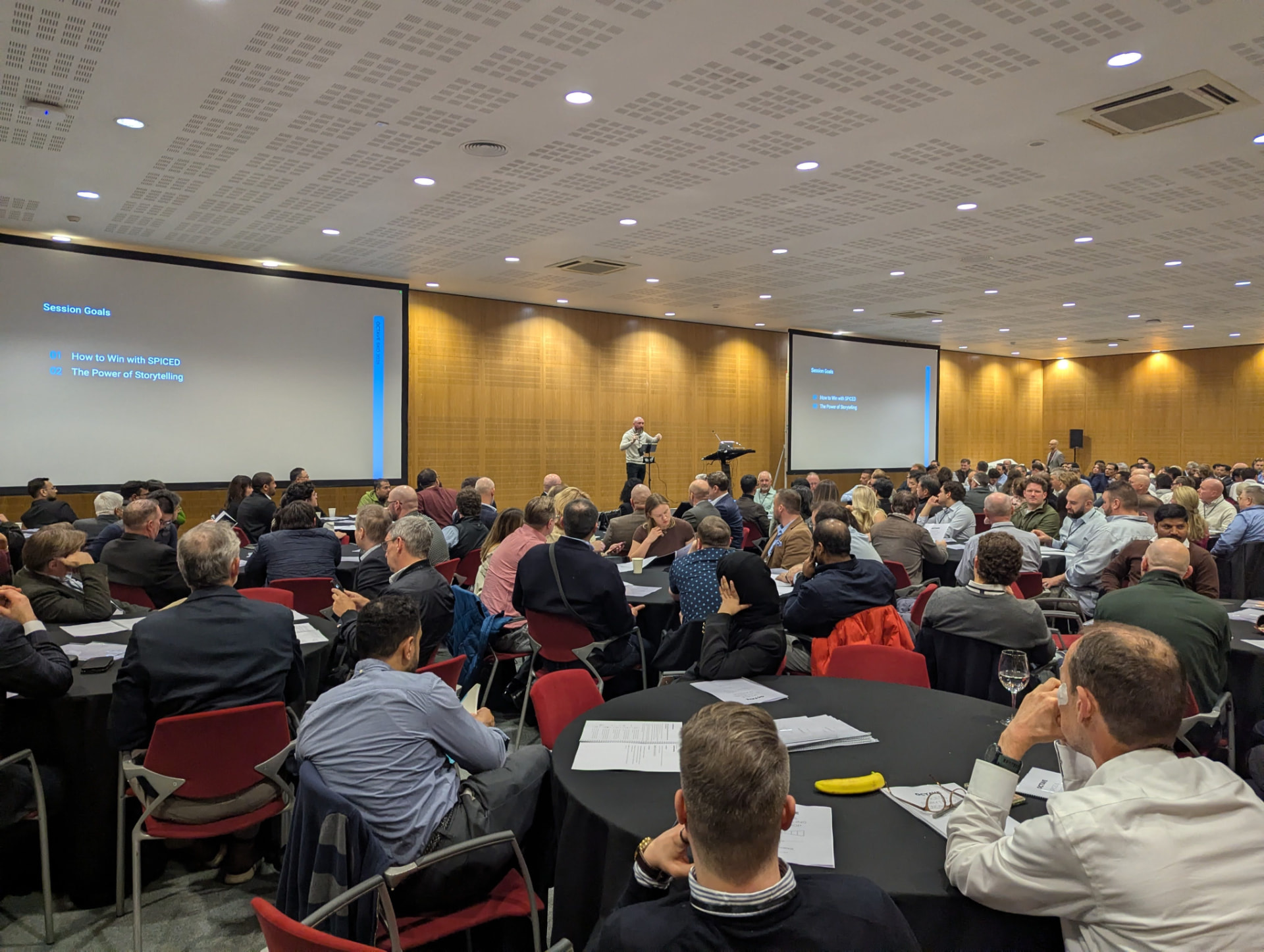
Virtual, in person or hybrid — from 30-person workshops to 100+ attendee events. Psychological safety first, so people contribute honestly instead of performing for the room.
- Sales and manager enablement
- Leadership and team workshops
- Conference and large-group facilitation
- 04Embed
Principle 04 · Monday is the real test
Make the new behaviour survive contact with the week
Managers coached to reinforce it, simple rituals to keep it alive, and follow-up that checks what changed rather than what was covered.
- Manager coaching
- Reinforcement sessions
- Train-the-facilitator
- 05Enable others
Principle 03 · The room is where it closes
Grow the people who run the room
For trainers and facilitators who want more than a script: how to hold a group, ask better questions, and use AI to prepare without flattening the human part.
- Facilitation skills programmes
- AI for sellers and facilitators
- Coaching and supervision
“The measure isn't how much content was covered. It's what people can do differently afterwards.”